Explore online associate degrees for healthcare careers. This guide details healthcare associate degrees online, explains hybrid formats, and links specific healthcare degree online programs to clinical job pathways and licensure.
Thinking about a healthcare career? It's steady work with real impact—but starting out can feel overwhelming. A full bachelor's degree takes time and money. That's where online associate degrees help. In just two years, they teach the practical skills you need for entry-level roles and often set you up for a job soon after. Here's how they work and how to pick the right fit.
What Is an Online Healthcare Associate Degree
When people talk about online healthcare associate degrees, the key thing to know is how these programs actually work. Most of them follow a hybrid setup. Skills like drawing blood, taking X-rays, or running cardiopulmonary tests cannot be learned through a screen alone. For that reason, almost every clinical or technical healthcare program includes required in-person training.
- The online portion focuses on classroom learning.
This usually includes subjects such as medical terminology, anatomy and physiology, basic pharmacology, healthcare ethics, and an introduction to common disease processes. Coursework is delivered through recorded lectures, digital reading materials, discussion boards, and simple virtual practice tools. This part of the program is designed to fit around work and family schedules, so many students complete it in the evenings or on weekends.
- The in-person component is required and cannot be skipped.
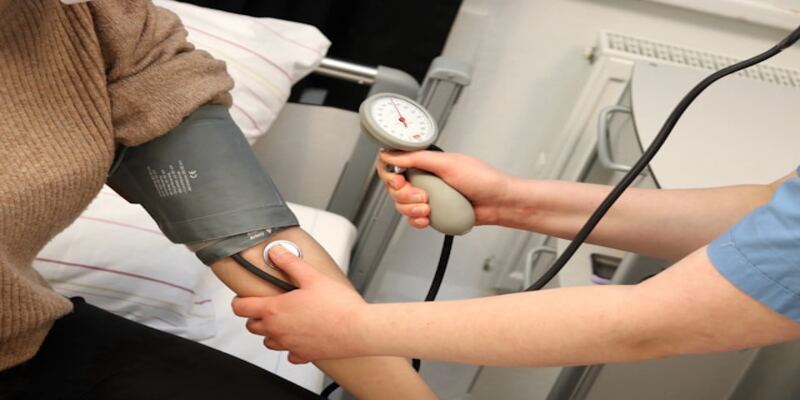
Students practice hands-on skills in campus labs using real equipment and training models. Most programs also include a clinical externship, where students work under supervision at hospitals, clinics, labs, or imaging centers in their local area. These placements are a standard part of healthcare training and are often required to meet employer expectations or state rules.
This mix of online study and on-site practice is what makes healthcare associate degrees possible in a remote format, without cutting corners on real-world skills。
Common Types of Healthcare Degree Online Programs
Several associate degrees have well-established online-hybrid pathways. Here are the most common roles and the roles they lead to.
Associate of Science in Nursing (ASN/ADN)
This is the most direct path to becoming a Registered Nurse (RN). The coursework in pathophysiology, nursing care, and pharmacology is intensive. The clinical hours are extensive - hundreds of hours in various hospital departments.
Due to its rigor, purely online ADN programs are rare, but "hybrid" or "blended" programs are common. These streamline the lecture content online but require in-person labs and clinicals. Purdue Global offers an online-based Associate of Science in Nursing that requires local clinical placements. Cost is approximately $30,000 total, but varies. It's a pathway to sit for the NCLEX-RN exam.
Associate of Applied Science in Radiologic Technology
This prepares you to become a Radiologic Technologist, taking X-rays. The online curriculum covers radiation physics, patient positioning, and image evaluation. The in-person requirements are heavy, involving supervised clinical rotations in a hospital radiology department. Jersey College offers a hybrid A.A.S. in Radiologic Technology with online didactic courses and coordinated clinicals. Program length is typically 24 months.
Associate Degree in Medical Laboratory Technology (MLT)
MLTs work in lab settings, analyzing blood, body fluids, and cells. The online theory covers microbiology, hematology, and clinical chemistry. The hands-on component involves a structured practicum in a clinical lab. Weber State University offers a fully online MLT AAS, but students must complete their clinical practicum at an affiliated site near them. The total cost is around $20,000.
Associate of Applied Science in Health Information Technology (HIT)
This is one of the most truly online-friendly options. HIT professionals manage patient data, medical codes, and electronic health records. The work is computer-based, so the hands-on requirements are often virtual labs using professional software. An externship may be required, but can often be local. Penn Foster College offers an online AAS in Health Information Technology that can be completed in as little as 18 months, with an externship arranged locally. Cost is around $5,000-$7,000.
Associate Degree in Occupational Therapy Assistant (OTA) or Physical Therapist Assistant (PTA)
These are hands-on rehab roles. The online coursework covers human movement, therapeutic techniques, and medical conditions. The lab and clinical requirements are extensive and must be done in person at approved facilities. St. Catherine University offers a hybrid OTA program with online courses and on-campus intensive labs.
Associate of Science in Nursing (ASN / ADN)
Nursing is one of the most common hybrid associate degrees in healthcare. Most theory courses can be completed online, but students must attend in-person labs and clinical rotations. Clinical hours are required to qualify for the NCLEX-RN licensure exam. Full-time study typically takes 20-24 months, while part-time options may extend that.
Several schools offer hybrid or partially online ADN programs:
Herzing University blends online coursework with in-person clinical experiences and on-site skills intensives. Tuition is higher for this private program, about 72 credits over roughly two years.
University of Charleston in West Virginia offers online theory with weekend labs and clinicals, often completing in 16 months. Tuition is around $380 per credit, totaling $22,000-$34,000.
Rasmussen University provides multiple start dates with online classes and on-site lab/clinical rotations.
John A. Logan College delivers lectures online, with two to three days per week on campus for labs and clinicals over 15 months, costing about $160 per credit.
Germanna Community College in Virginia combines online classes with campus labs and local clinical practice. Total in-district cost is around $10,512.
Community colleges and public schools generally offer the most affordable hybrid ADN pathways and accept federal financial aid.
When comparing programs, pay attention to the sequence of clinical placements, weekly on-site requirements, and whether the school assists in securing local clinical sites. Graduates must pass the NCLEX-RN to work as a Registered Nurse.
Associate of Applied Science in Radiologic Technology
Radiologic Technologists perform diagnostic imaging (X-rays, sometimes CT and fluoroscopy). The associate degree remains the standard entry credential in most states, with licensure or certification often tied to passing the ARRT exam.
Hybrid components vary by school. You can expect online didactic coursework that covers radiation safety, anatomy, patient positioning, and imaging principles. In-person labs and clinical rotations are scheduled at a campus or local healthcare facility.
Here are some programs to consider:
At Rasmussen University you can enroll in an Associate's in Radiologic Technology. It's structured for completion in about 24 months and combines online study with hands-on clinical experience at approved sites.
Red Rocks Community College in Colorado offers a radiologic technology program where many courses are available online, though labs and clinicals must take place in person. This program is accredited by the Joint Review Committee on Education in Radiologic Technology (JRCERT).
Midlands Technical College has hybrid delivery options for radiologic technology coursework, with a mix of online and on-campus sessions.
Programs usually require two full years to complete. Clinical rotations may be arranged locally, but you may need to travel to the campus for labs at certain points in the schedule.
ARRT certification eligibility is separate from the degree; after graduating, you must sit for the ARRT exam, which many employers require before you can work independently.

Associate Degree in Medical Laboratory Technology (MLT)
Medical Laboratory Technician programs train students to analyze blood, tissues, and other specimens in diagnostic labs. Hybrid programs typically mix online coursework with substantial hands-on lab practice and clinical placements, and prepare graduates to sit for the ASCP Board of Certification exam, which many employers require.
Gateway Technical College (Wisconsin)
Gateway's hybrid MLT associate degree combines online coursework with more than 500 hours of hands-on lab and clinical experience. Students complete 216 hours in simulation labs and 288 hours in clinical sites. Estimated tuition & fees are about $11,955, plus books and supplies.
Blackhawk Technical College (Wisconsin)
Blackhawk's MLT associate degree is accredited by the National Accrediting Agency for Clinical Laboratory Sciences (NAACLS) and includes a final semester of clinical experience in community healthcare facilities. The program explores laboratory skills, microbiology, hematology, chemistry, and quality control.
Laurel Institutes (West Virginia / Online)
Laurel's MLT program offers a hybrid format with online coursework complemented by hands-on skills labs and clinical internships. The program duration is about 20 months and includes courses in anatomy, pathophysiology, microbiology, immunology, and laboratory procedures.
Associate of Applied Science in Health Information Technology (HIT)
Health Information Technology focuses on managing medical records, coding, billing, and patient data - work that is mostly computer-based and often online-friendly.
Many programs combine online lectures with optional local practicum or professional practice experience. Graduates often sit for the Registered Health Information Technician (RHIT) exam from AHIMA.
Examples of HIT Associate Programs:
Davenport University - Health Information Technology AAS
A fully online Associate of Applied Science in Health Information Technology degree. Coursework covers patient data management, coding, reimbursement and prepares students for the RHIT credential.
Pima Community College - Health Information Technology AAS
A HIT associate degree that can be completed entirely online with a required internship component (about 144 hours).
Pitt Community College - HIT AAS
Offers HIT associate entirely online, except for professional practice experiences arranged locally. The program prepares for roles in health information and maylead too a bachelor's degree in health informatics.
Ozarks Technical Community College (OTC) - AAS Health Information Technology
A 65-credit AAS degree with online coursework and in-person professional practice experience (clinical component).
University of Arkansas - Pulaski Technical College - HIT AAS
A Health Information Technology associate degree accredited by CAHIIM with online coursework and a locally arranged practicum.
San Juan College - Health Information Technology AAS
100% online HIT coursework with a required 40-hour internship. In-state tuition is estimated at around $9,000 and out-of-state around $18,100.
Harper College - A.A.S. Health Information Technology
Asynchronous online program that takes about 21 months full-time, accredited by CAHIIM and prepares students to sit for the RHIT exam.
Associate Degrees in Occupational Therapy Assistant (OTA) / Physical Therapist Assistant (PTA)
Both Occupational Therapy Assistants (OTAs) and Physical Therapist Assistants (PTAs) work under the supervision of licensed clinicians in rehabilitation settings. Online coursework typically covers anatomy, movement science, therapeutic practices, and professional standards.
Because these roles involve hands-on patient care, programs require in-person skills labs and clinical rotations at approved healthcare facilities. Accreditation is essential for eligibility to sit for national board exams and state licensure.
Occupational Therapy Assistant (OTA) Programs
OTA programs train you to help occupational therapists implement treatment plans, adapt tasks, and support patients' functional independence.
St. Catherine University (Minnesota)
St. Kate's online OTA program blends most coursework online with periodically scheduled hands-on labs and fieldwork in states like California, Minnesota, Texas, and Virginia. Graduates can sit for the NBCOT certification exam after completion.
Bryant & Stratton College
Bryant & Stratton offers a hybrid A.A.S. in Occupational Therapy Assistant where online lectures are combined with on-campus labs, typically one weekend per mont,h in states including New York, Ohio, Virginia, or Wisconsin. Program length is about 20 months and includes required clinical fieldwork.
Herkimer County Community College (New York)
Herkimer's OTA A.A.S. mixes online instruction with local fieldwork and in-person labs. Students engage in supervised clinical experience in rehabilitation centers.
Oklahoma Technical College
OTC provides an OTA A.A.S. with online didactic learning, on-campus labs, and clinical training, typically completed over two years.
Other public community colleges, such as Piedmont Technical College,e also offer OTA programs that integrate classroom instruction with supervised fieldwork.
All OTA graduates are eligible to take the NBCOT Occupational Therapy Assistant exam and to pursue state licensure, where required.
Physical Therapist Assistant (PTA) Programs
PTA programs prepare students to help physical therapists carry out rehabilitation plans, assist with therapeutic exercises, and track patient progress. Hybrid formats typically include online instruction for theory and scheduled on-campus labs, followed by clinical education.
San Juan College (New Mexico)
San Juan College's hybrid PTA associate combines online study with hands-on clinical education. The program runs about 36-42 months with around 49 credits and prepares graduates to sit for the NPTE (National Physical Therapy Examination).
Clarkson College (Nebraska)
Clarkson offers a hybrid Associate of Science in PTA with online coursework, four immersive on-campus skills weekends per semester, and clinical placements. Graduates are prepared for supervised practice and NPTE eligibility.
Mendocino College (California)
Mendocino College's hybrid PTA program includes online lectures and in-person skills labs, often two days per week during lab terms, with clinical rotations.
Whatcom Community College (Washington)
Whatcom's PTA curriculum combines online theory with in-person labs and clinical instruction. Tuition is around $14,162 total.
American Career College (California)
ACC's Physical Therapist Assistant associate is delivered in a blended format, with online classes and in-person labs/clinical sessions at Orange County or Inland Empire campuses. It includes over 600 hours of clinical experience.
Other hybrid or commuter-friendly PTA options include Carroll Community College, College of the Sequoias, and State Technical College of Missouri, which offer online components alongside required in-person labs and clinical work.
Most hybrid PTA programs take about two years of full-time study. Accreditation by the Commission on Accreditation in Physical Therapy Education (CAPTE) is critical because it affects eligibility for the NPTE and employment in most states.
Notes on Practical Considerations
Hybrid OTA and PTA programs always require hands-on training and clinical fieldwork, even if most lectures are online. Confirm how your chosen school arranges clinical placements and whether travel is required. Accreditation (ACOTE for OTA, CAPTE for PTA) is essential to ensure your degree leads to national exam eligibility and licensure.

Key Components of Online Healthcare Programs
When you're comparing online or hybrid healthcare associate degrees, certain elements make a real difference in how well the program prepares you for work or certification. These go beyond just "online vs in‑person" and speak to the quality of the training.
Integrated Certification Preparation
A good healthcare program clearly aligns its coursework with the content of national certification or licensure exams. For example, many online nursing and allied health programs map their classes directly to the NCLEX-RN or other field-specific exams so that what you learn in class reflects what you will need to know on test day.
First-time NCLEX-RN pass rates vary by program and year, and national aggregated data are published by the National Council of State Boards of Nursing; for example, in 2025, first-time U.S.educated NCLEX-RN candidates achieved approximately an 87.1% pass rate.
When evaluating programs, ask for recent first-time pass rates or success rates for certification exams. If a school tracks these outcomes, it shows they're paying attention to measurable readiness.
Virtual Simulation Tools
Many accredited online programs now include virtual simulation platforms that give you a safe way to build clinical reasoning and decision‑making skills before you enter labs or clinical sites. One example is vSim for Nursing, co‑developed by Laerdal Medical and Wolters Kluwer, which presents interactive cases based on real practice scenarios so students can practice tasks like assessment and intervention in a virtual setting.
Research in nursing education also shows that high‑fidelity simulation and virtual reality can improve clinical confidence and critical thinking, especially in areas where traditional clinical placements are limited.
Virtual tools do not replace real clinical hours, but they can make your time in labs and clinical rotations more productive because you arrive with some experience handling patient scenarios.
Career Pathway Connections
A program that helps you beyond the associate degree is often easier to evaluate. Part of this is looking for formal agreements with four-year colleges or universities. These "articulation agreements" - often called "2+2" pathways - allow credits from your associate degree to transfer smoothly into a bachelor's program in a related field, such as health informatics or nursing.
Another sign of a connected program is whether the school lists an industry advisory board made up of local healthcare employers. These boards help ensure the curriculum reflects what hospitals, clinics, and other healthcare employers actually need from new hires.
Programs that share information about recent employer partnerships or advisory boards tend to be more responsive to job-market expectations.
Evaluating Costs and Time to Completion
The total cost of an online or hybrid healthcare associate degree can vary a lot depending on where you study and how the program is structured. At many public community colleges, in-state tuition and fees for an associate degree can be quite low - around $3,500-$5,000 per year for online or in-district students, with out-of-state students paying somewhat more.
At private schools, annual tuition can be $16,000 or higher, and specialized clinical programs sometimes exceed $40,000 total. These figures don't include extra costs you'll encounter along the way.
Beyond tuition, you should budget for several categories of expenses:
- Fees.
Many programs add extra fees for labs, technology access, clinical coordination, and student services. Some colleges charge separate clinical placement or simulation lab fees.
- Supplies.
Even if coursework is online, you'll need scrubs, a stethoscope, blood pressure cuff, books, protective equipment, and sometimes specialized software, which can total several hundred dollars.
- Clinical costs.
Programs typically require background checks, drug screens, and immunizations before you can enter a clinical site. Travel expenses to labs and clinical placements also add up, especially if sites are not nearby.
- Licensure and certification.
After graduation, plan for national exam application fees - for example, the NCLEX or other boards - which often run between $200 and $500.
Time to completion for most full-time healthcare associate programs is about 18-24 months. Part-time options exist but often stretch to 3-4 years once you factor in clinical rotations and scheduling. Knowing the full timeline upfront helps you plan work, childcare, and financial commitments.
Your Next Step in Program Research
Once you've identified your career direction, take a systematic approach to comparing programs so you can make an informed choice.
Identify Your Target Career. Narrow down to one or two job titles that match your interests, such as registered nurse, radiologic technologist, or health information technician. Having specific goals helps you focus on the right types of programs.
Find 3-5 Programs. Use targeted searches such as "[Your State] Community College ADN online" or "[Degree Name] online hybrid" to build a list of programs to compare.
Gather Hard Data. For each program, create a document that includes:
- Total estimated cost (tuition + fees + supplies)
- Program length and schedule
- Required on- campus lab and clinical hours
- Programmatic accreditation (essential for licensure)
- Recent exam pass rates
Contact Licensing Boards. Call or email your state's professional board for your chosen career to confirm specific accreditation and exam eligibility requirements.
Talk to the Program. Ask admissions for a sample weekly schedule, how clinical placements are arranged, whether the school assists with placements, and if you can speak with recent graduates.
This process ensures that your investment leads to a valid license and career pathway. The right online associate degree is effective only if it's built on a solid, accredited foundation.